See what I see
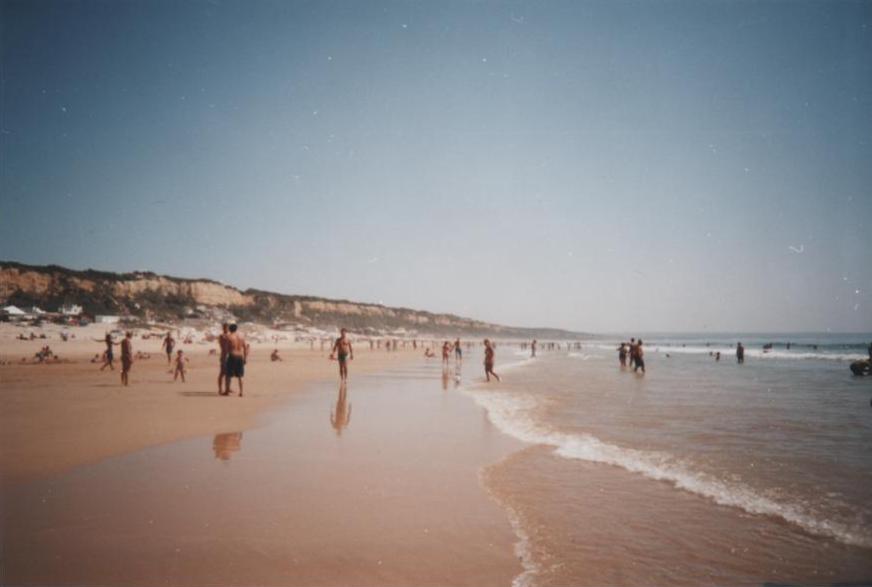
 O rio Tejo vindo (a vir) de Espanha.
Depois de um duche (eu devia saber, estar mais avisada do que isto...), vou até a faculdade (não, não saiu nenhuma nota), onde escorrego no degrau da entrada... Enfim, desço até a Baixa da cidade e, puff, vinda não sei de onde esbarra em mim e na minha saia limpa uma miúda coberta de gelado de chocolate... um pouco mais à frente ultrapasso um casal de turistas e, hei, levei com um pingo directamente do ar condicionado de alguém (ihac)... Já na zona do supermercado, há tráfego constante de autocarros... Finalmente, entro, faço as minhas compras e na caixa levo uma pisadela duma idosa (eu 'tava de chinelos)... Pago e volto para casa. De autocarro, claro está. Que avariou duas vezes (porcaria de cabos eléctricos) antes da minha paragem, que eu, de resto, não vi chegar, pelo que só sai na seguinte...
...e agora que penso nisso, esqueci-me do pão...
Note to future self: fazer lista de compras e OLHAR PARA ELA enquanto ando às compras e NUNCA MAIS tomar duche ANTES de ir ao supermercado; ou não sair de casa...
Quando você vai embora de nós
o pronome parte-se ao meio
você diz que só leva o s
e o que adianta?
se comigo sobra o nó
na garganta.
Cuando termine de arreglar mi aviónQuiero salir a dar una vuelta sobre la cuidadQuiero ver como la gente camina sobre las calles mojadasQuiero ver los paraguas negros bajo mis piesQuiero contar cuantas personas salen a caminarSin miedo a mojar su cabezaCreo que veré a un par de locos caminar sin miedoPor el centro de la ciudad
Pisando las posas de agua y fumando un cigarro
Pensando calladamente en el pasado
Y amando en cada segundo su presente
Deseándose mutuamente un buen futuro
Te voy a pasar a buscar
Me voy a estacionar en los techos de enfrente
Y te cantaré una canción
Quiero que te asomes a la ventana
Con tu sonrisa de siempre
Esa que me encanta y me derrite cada mañana
Quiero que camines con tu maleta por los techos
Y que llegues hasta mi
Tomes mi mano y subas
Sin miedo
¿dónde iremos?
El avión está con piloto automático
Listo para viajar donde sea
Donde el nos quiera llevar
Un lugar tranquilo
Ahí donde los fantasmas no existen
Porque está todo hecho para que soñemos las dos
Ahí, donde con mis billetes de metrópoli
Voy a comprar un terreno y construir nuestra casa
Ahí, donde con toda la familia 104 viviremos
Estoy esperando que la pintura de mi avion se seque
Ojala que los colores que elegí te gusten
Y que no sea peligroso viajar con la lluvia que cae afueraNadie
«- Trás-os-Montes entra na era das autoestradas.» - o 1ºministro, em directo para a SIC no telejornal das 13h, a propósito da inauguração de 32km de autoestrada no norte do país.
Não se enganem, o que ele quis dizer foi que sair daquela zona do país será agora mais rápido. É apenas um meio eficaz de aumentar a desertificação do interior, não que alguém deva ser forçado a viver onde quer que seja... muito menos na miséria vergonhosa a que os sucessivos politícos têm votado certas zonas do nosso belo e verdinho país.
«As his biography suggests, Fromm's theory is a rather unique blend of Freud and Marx. Freud, of course, emphasized the unconscious, biological drives, repression, and so on. In other words, Freud postulated that our characters were determined by biology. Marx, on the other hand, saw people as determined by their society, and most especially by their economic systems.
He added to this mix of two deterministic systems something quite foreign to them: The idea of freedom. He allows people to transcend the determinisms that Freud and Marx attribute to them. In fact, Fromm makes freedom the central characteristic of human nature!
There are, Fromm points out, examples where determinism alone operates. A good example of nearly pure biological determinism, ala Freud, is animals (at least simple ones). Animals don't worry about freedom -- their instincts take care of everything. Woodchucks, for example, don't need career counseling to decide what they are going to be when they grow up: They are going to be woodchucks!
A good example of socioeconomic determinism, ala Marx, is the traditional society of the Middle Ages. Just like woodchucks, few people in the Middle Ages needed career counseling: They had fate, the Great Chain of Being, to tell them what to do. Basically, if your father was a peasant, you'd be a peasant. If your father was a king, that's what you'd become. And if you were a woman, well, there was only one role for women.
Today, we might look at life in the Middle Ages, or life as an animal, and cringe. But the fact is that the lack of freedom represented by biological or social determinism is easy. Your life has structure, meaning, there are no doubts, no cause for soul-searching, you fit in and never suffered an identity crisis.
Historically speaking, this simple, if hard, life began to get shaken up with the Renaissance. In the Renaissance, people started to see humanity as the center of the universe, instead of God. In other words, we didn't just look to the church (and other traditional establishments) for the path we were to take. Then came the Reformation, which introduced the idea of each of us being individually responsible for our own soul's salvation. And then came democratic revolutions such as the American and the French revolutions. Now all of a sudden we were supposed to govern ourselves! And then came the industrial revolution, and instead of tilling the soil or making things with our hands, we had to sell our labor in exchange for money. All of a sudden, we became employees and consumers! Then came socialist revolutions such as the Russian and the Chinese, which introduced the idea of participatory economics. You were no longer responsible only for your own well-being, but for fellow workers as well!
So, over a mere 500 years, the idea of the individual, with individual thoughts, feelings, moral conscience, freedom, and responsibility, came into being. But with individuality came isolation, alienation, and bewilderment. Freedom is a difficult thing to have, and when we can we tend to flee from it.
(...)
In fact, since humanity's "true nature" is freedom, any of these escapes from freedom alienates us from ourselves. Here's what Fromm had to say:
"Man is born as a freak of nature, being within nature and yet transcending it. He has to find principles of action and decision making which replace the principles of instincts. he has to have a frame of orientation which permits him to organize a consistent picture of the world as a condition for consistent actions. He has to fight not only against the dangers of dying, starving, and being hurt, but also against another anger which is specifically human: that of becoming insane. In other words, he has to protect himself not only against the danger of losing his life but also against the danger of losing his mind." (Fromm, 1968, p. 61)
I should add here that freedom is in fact a complex idea, and that Fromm is talking about "true" personal freedom, rather than just political freedom (often called liberty): Most of us, whether they are free or not, tend to like the idea of political freedom, because it means that we can do what we want. A good example is the sexual sadist (or masochist) who has a psychological problem that drives his behavior. He is not free in the personal sense, but he will welcome the politically free society that says that what consenting adults do among themselves is not the state's business! Another example involves most of us today: We may well fight for freedom (of the political sort), and yet when we have it, we tend to be conformist and often rather irresponsible. We have the vote, but we fail to use it! Fromm is very much for political freedom -- but he is especially eager that we make use of that freedom and take the responsibility that goes with it.»


 hum...